
By continuing to use our site, you consent to the processing of cookies, user data (location information, type and version of the OS, the type and version of the browser, the type of device and the resolution of its screen, the source of where the user came from, from which site or for what advertisement, language OS and Browser, which pages are opened and to which buttons the user presses, ip-address) for the purpose of site functioning, retargeting and statistical surveys and reviews. 

Languages Canada Advocacy Tour Advances Key Policy Priorities

The Languages Canada public affairs team was on Parliament Hill in Ottawa May 25-27 and Toronto on May 28, meeting with parliamentarians, political staffers, and senior public servants to advocate for favourable policy changes for Canada’s Official Languages education sector.

The meetings positioned French and English language education as critical infrastructure for Canada’s future, aligning with federal government priorities for trade diversification, talent attraction, culture and identity, and immigration, including Francophone minority communities.
Meetings and Stakeholder Engagement

During the tour, the Languages Canada team met with:

  • Ted Gallivan, newly appointed Deputy Minister of IRCC
  • Senior Advisor to The Honourable Lena Metlege Diab, Minister of IRCC
  • Senior Advisor to The Honourable Maninder Sidhu, Minister of International Trade
  • Shannon Miedema, Member of Parliament for Halifax
  • Chief of Staff to The Honourable Hedy Fry, Member of Parliament for Vancouver Centre
  • Madeleine Chenette, Parliamentary Secretary to the Minister of Canadian Identity and Culture and Minister Responsible for Official Languages, and member of the Standing Committee for Official Languages
  • David Wai, Deputy Minister of the Ontario Ministry of College and Universities, Research Excellence and Security
  • Sarah Pye, Executive Director, Export Support Division, Global Affairs Canada
  • The LC team also met with leadership from other national associations – Universities Canada, Colleges and Institutes Canada, CBIE, and CALDO – to share information and explore opportunities for alignment on advocacy priorities. 

Advancing Languages Canada's Pre-Budget Recommendations

This four-day tour was timely as it immediately followed Languages Canada’s pre-budget submission to the House of Commons Standing Committee on Finance. The pre-budget submission outlines three recommendations for the federal government, which were the focus of the Ottawa meetings:

Recommendation 1

Establish an Official Languages Student Pilot under the federal cap on study permits, operating under federal authority and outside the PAL/TAL system, for students accepted into DLIs with accredited English / French language programs.

Recommendation 2

Dedicate $1.5 million over three years for Francophone minority community recruitment and promotion initiatives linked to accredited French language-to-postsecondary education pathways.

Recommendation 3

Invest in improved predictability, transparency, and efficiency of study permit and visitor visa processing.

Members are invited to read the full pre-budget submission document here.

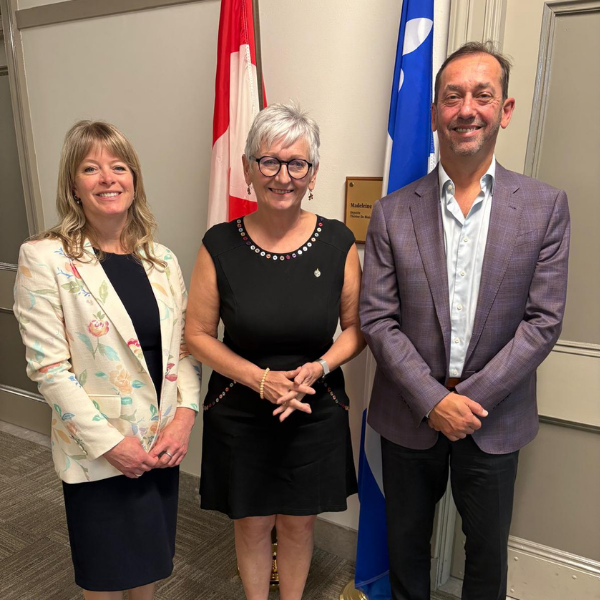
Languages Canada Executive Director, Gonzalo Peralta, and Public Affairs Director, Rachel Lindsey, with Madeleine Chenette, Parliamentary Secretary to the Minister of Canadian Identity and Culture and Minister Responsible for Official Languages, and member of the Standing Committee for Official Languages.

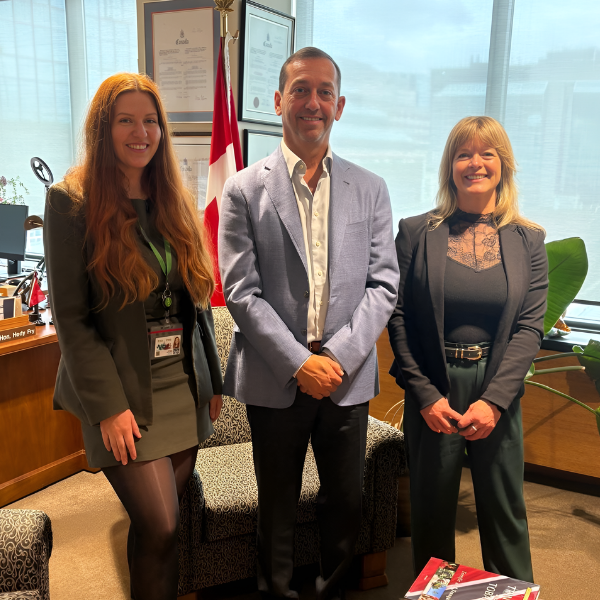
The Languages Canada team with Samantha Jerome, Chief of Staff to The Honourable Hedy Fry, Member of Parliament for Vancouver Centre

Key Takeaways from the Tour

Study Permit Caps Remain a Key Challenge

The federal government remains strongly focused on reducing the number of temporary residents in Canada to 5% of the total population, as per the latest Immigration Levels Plan. As a result, IRCC remains firm on its position to hold the study permit cap in place and will not consider any request that allows for an increase in study permit numbers. We are careful to emphasize that our ask for a “Pilot” for Official Languages students will not add additional entrants into Canada.

We Are Building Political Support Beyond IRCC

It is clear that advocacy to IRCC alone will not be sufficient to generate the political will needed to establish this special stream for ESL/FSL students; political pressure will have to come from MPs in key ridings in which there is a large concentration of members, other targeted parliamentarians, and from provinces. This is where much of our follow-up will focus.

There Are Opportunities for Francophone Pathways

IRCC is also committed to reaching its targets for increasing French speaking newcomers to Francophone minority communities to 12% of new permanent resident admissions by 2029. We see this as an opportunity for our French members to strengthen French language-to-postsecondary/permanent residency pathways.

Recognition of Language Education as an Export Sector Is Within Our Reach

We have traction with the office of the Minister of International Trade, who recognizes the value of Official Languages education as a service sector that generates significant export revenue and is a strategic asset for Canada’s trade diversification objectives.

We Are Expanding Our Presence with Parliamentary Committees

LC is working towards presenting to key Standing Committees, primarily Citizenship and Immigration and Official Languages. This week’s meetings laid the groundwork for that to happen. A meeting with Julie Dzerowicz, Chair of the Standing Committee on Citizenship and Immigration, is scheduled for later this month.

What's Next

This summer, after the House has risen and MPs are back in their home ridings, LC will be setting up in-person meetings with MPs and members in targeted ridings across Canada, allowing members to connect directly with your elected representatives to secure their support for our advocacy priorities. We will provide members with as much as advance notice of these meetings as possible.

A week on the Hill is already in the works for fall 2026.

This tour is part of Languages Canada's broader commitment to strengthening the sector's voice with decision-makers across government. Reflecting on the week's meetings, Executive Director Gonzalo Peralta said:

"As part of our ongoing efforts to demonstrate the value of Official Languages education across Canadian society—including its positive impact on education, the economy, the workforce, and communities—Languages Canada is working to establish a stronger and more consistent presence with policymakers and lawmakers in Ottawa. This week's advocacy tour was an important step toward that goal."